
Reconciliation of Cost and Financial Accounts Format
The reconciliation of cost and financial accounts formats compares and adjusts profit differences between cost and financial records, ensuring accurate and transparent reporting.
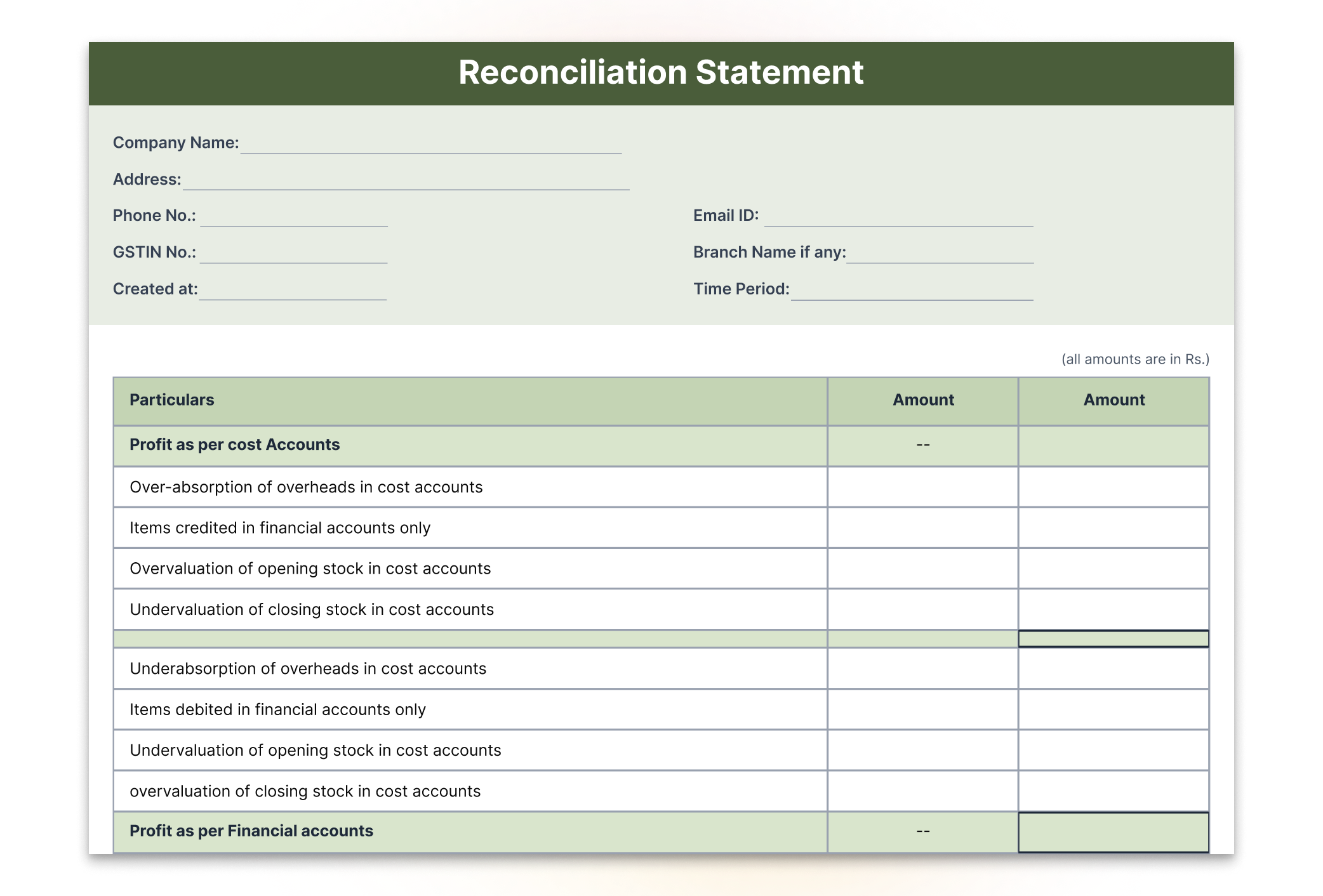
Download Reconciliation of Cost and Financial Accounts Format
Select the format that best suits your needs. We offer professional, ready-to-use templates in Excel, Word, and PDF for your business needs.
Reconciliation of Cost and Financial Accounts Format in Word
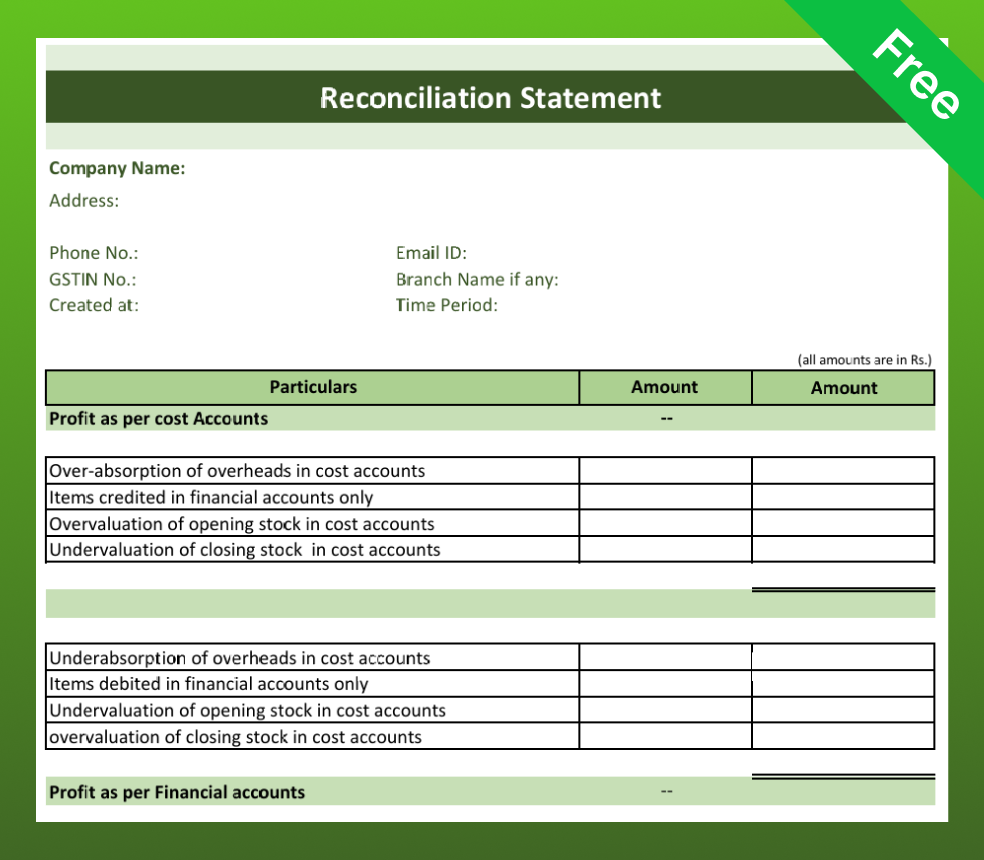
Word-1

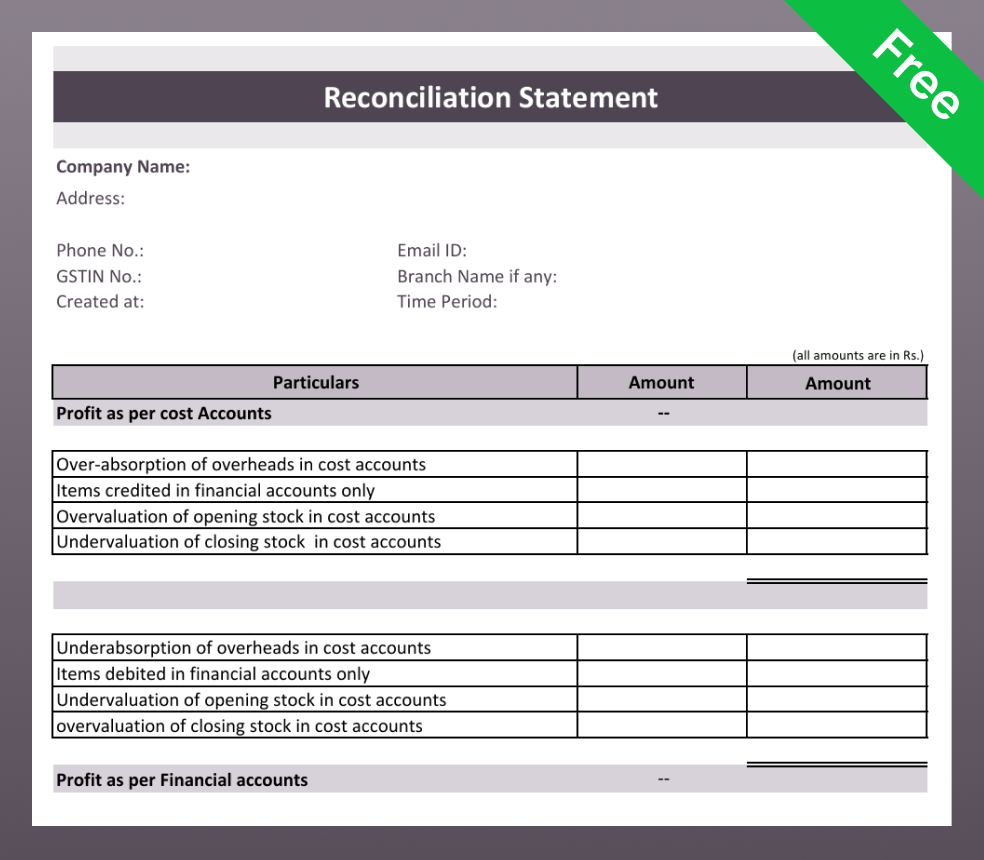
Word-2
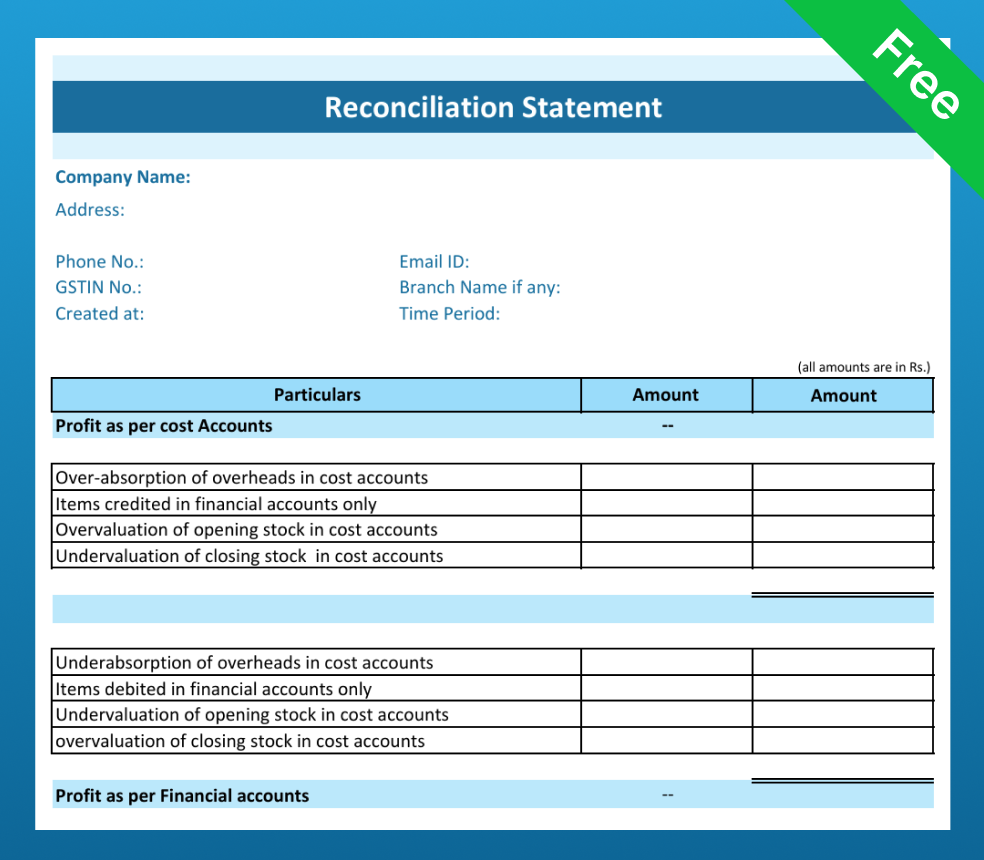
Word-3
Reconciliation of Cost and Financial Accounts Format in Excel
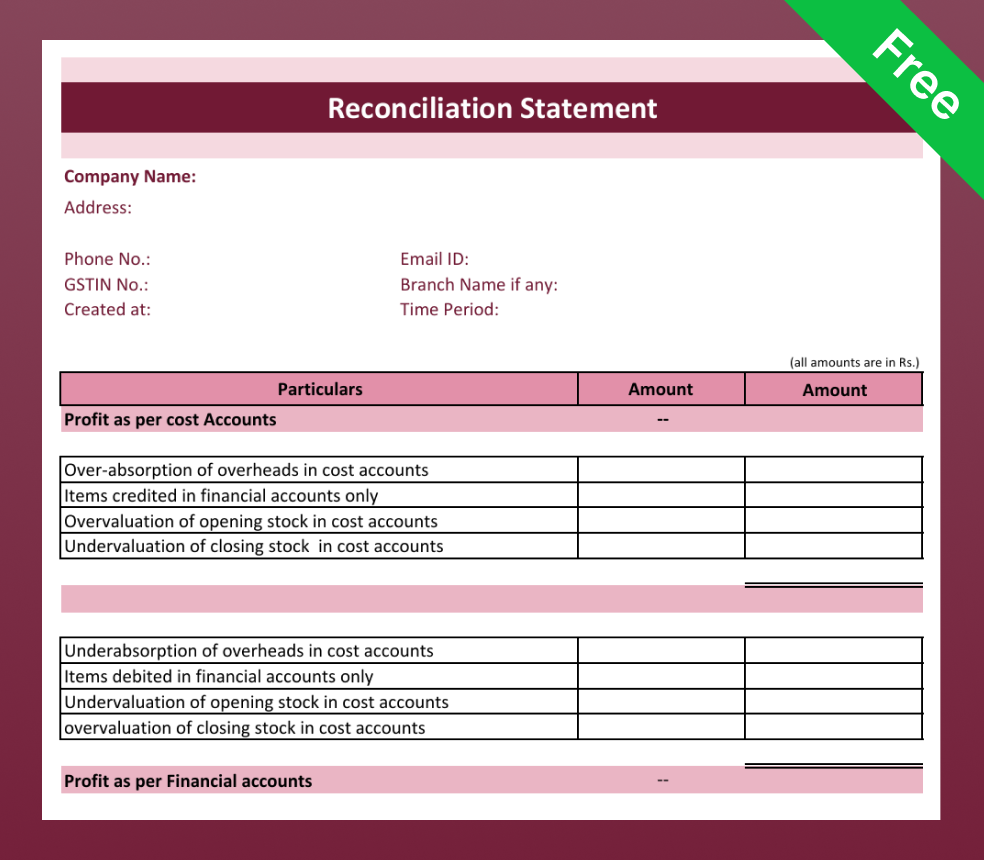
Excel-1
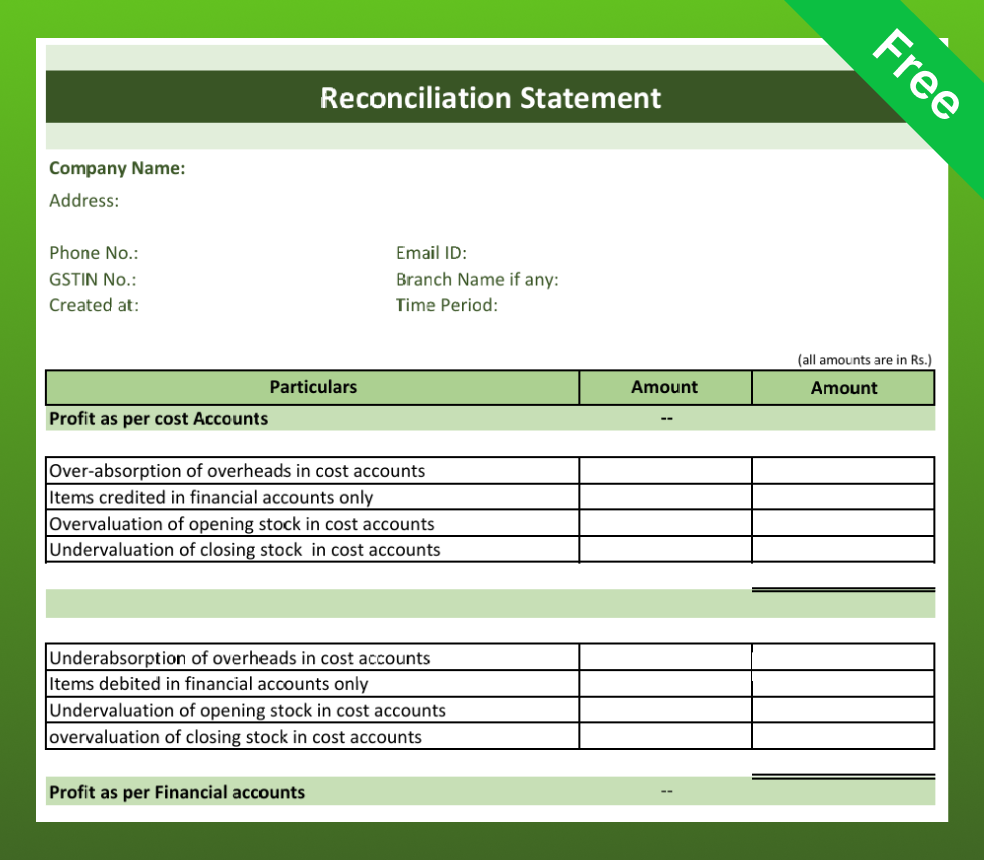
Excel-2
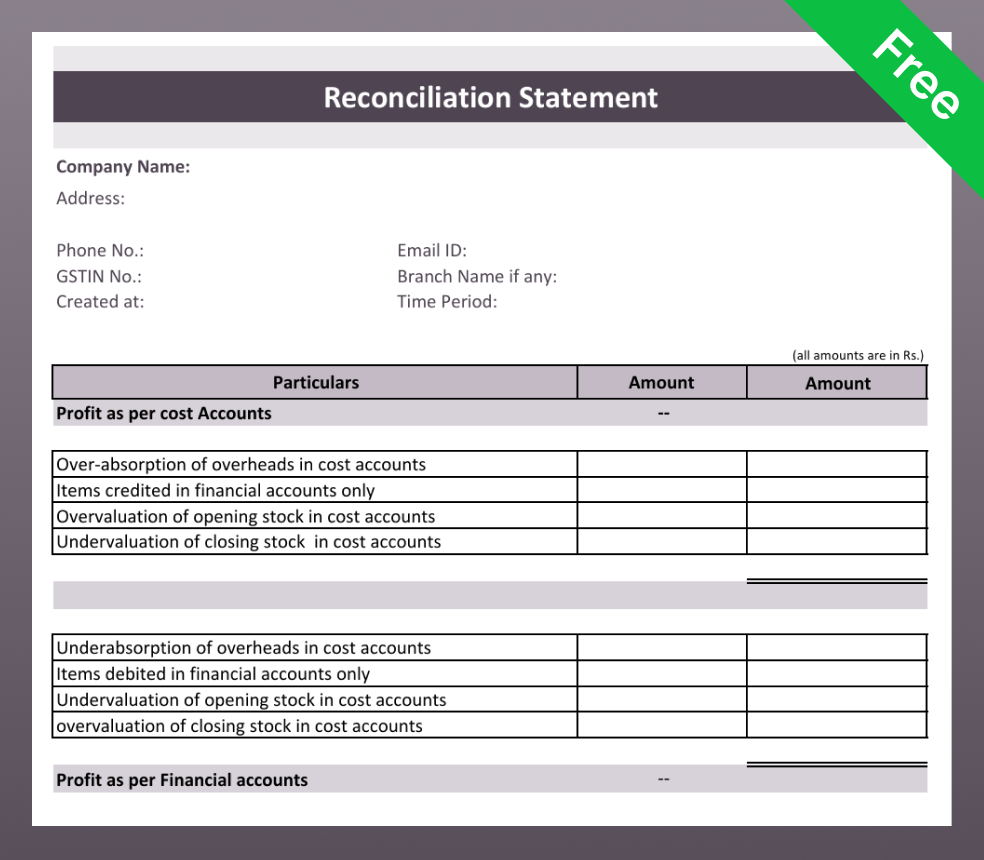
Excel-3
Reconciliation of Cost and Financial Accounts Format in PDF
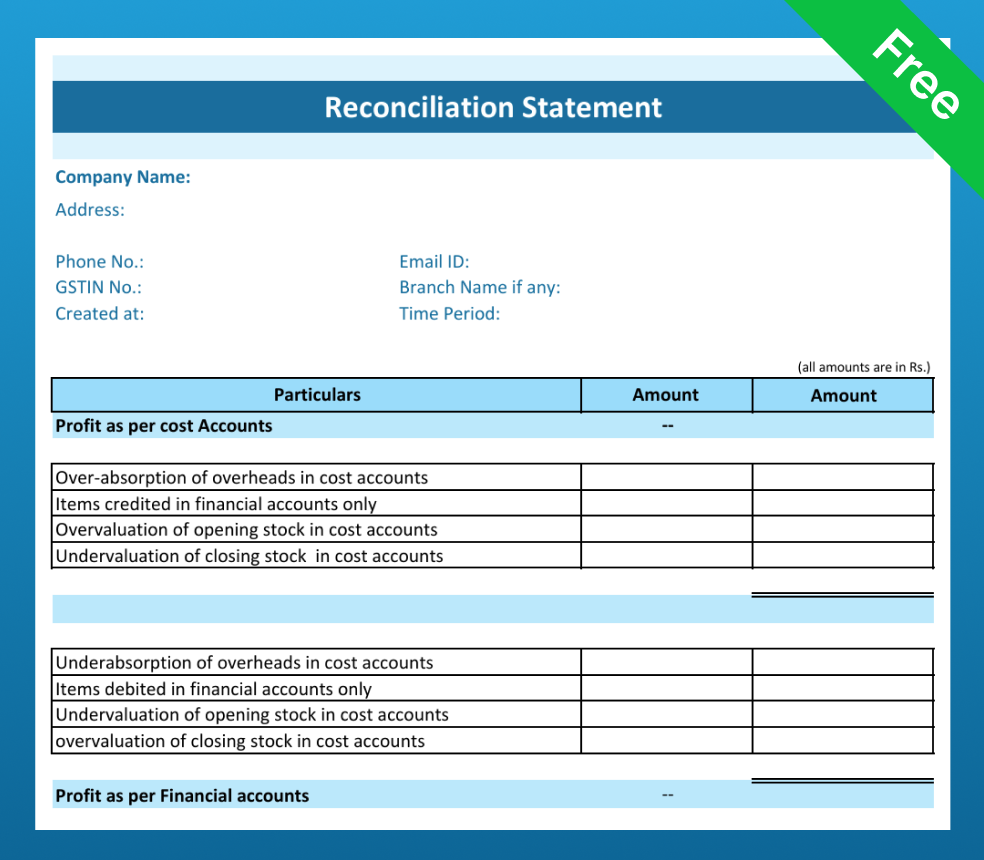
PDF-1
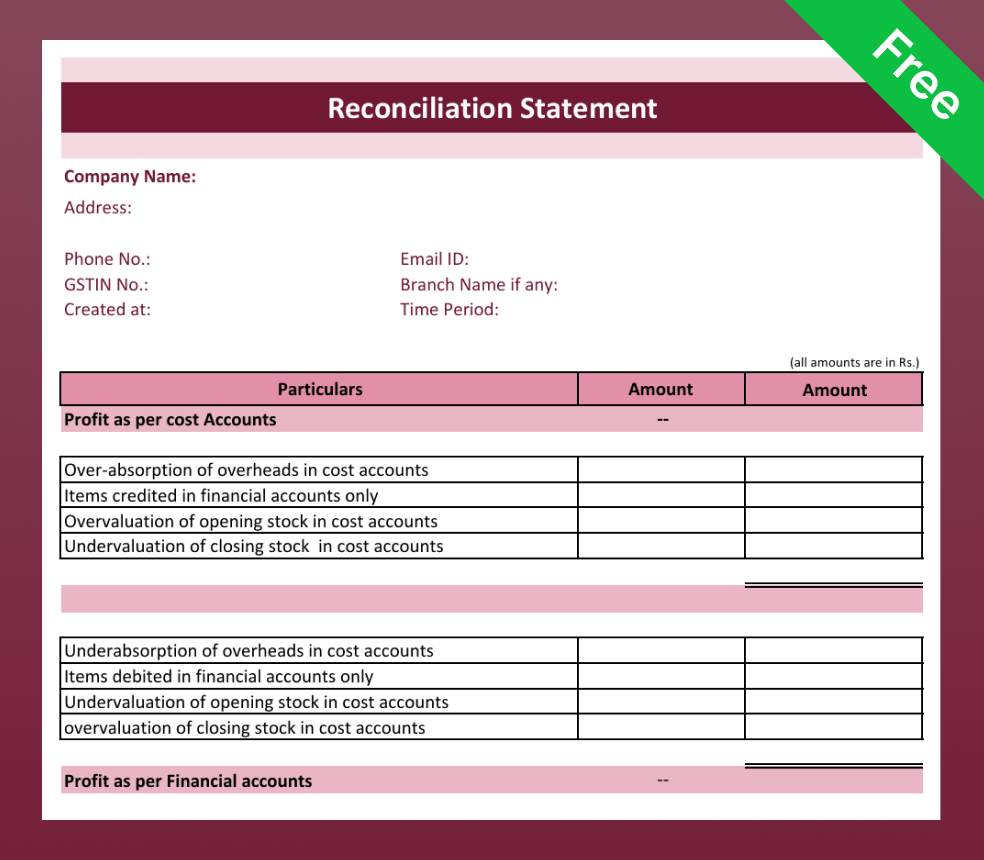
PDF-2
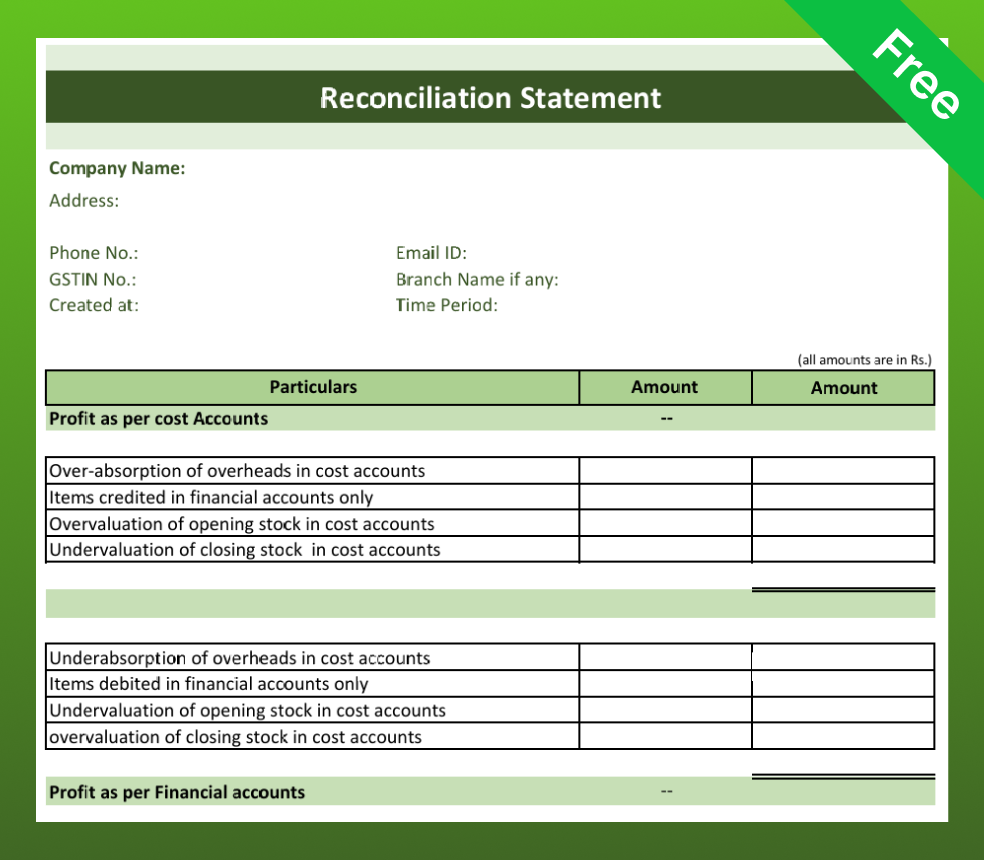
PDF-3
Skip Manual Format. Use Vyapar.
Key Components of Reconciliation Statement Format in Cost Accounting
Profit as per Cost Accounts
This is the starting point. It shows profit calculated from cost accounting records before adjustments are made.
Items in Financial Accounts Only (Add)
Add incomes recorded only in financial accounts, such as interest, rent, or profit on the sale of assets.
Expenses in Financial Accounts Only (Less)
Subtract expenses recorded only in financial accounts, like interest on loans, losses, or goodwill written off.
Over/Under Absorption of Overheads
Adjust differences in overhead costs when cost accounts over-absorb or under-absorb expenses compared to financial accounts.
Stock Valuation Differences
Adjust differences caused by using different stock valuation methods in cost accounts and financial accounting records.
Final Profit as per Financial Accounts
This is the final profit after all adjustments, showing the correct profit as per financial accounting records.
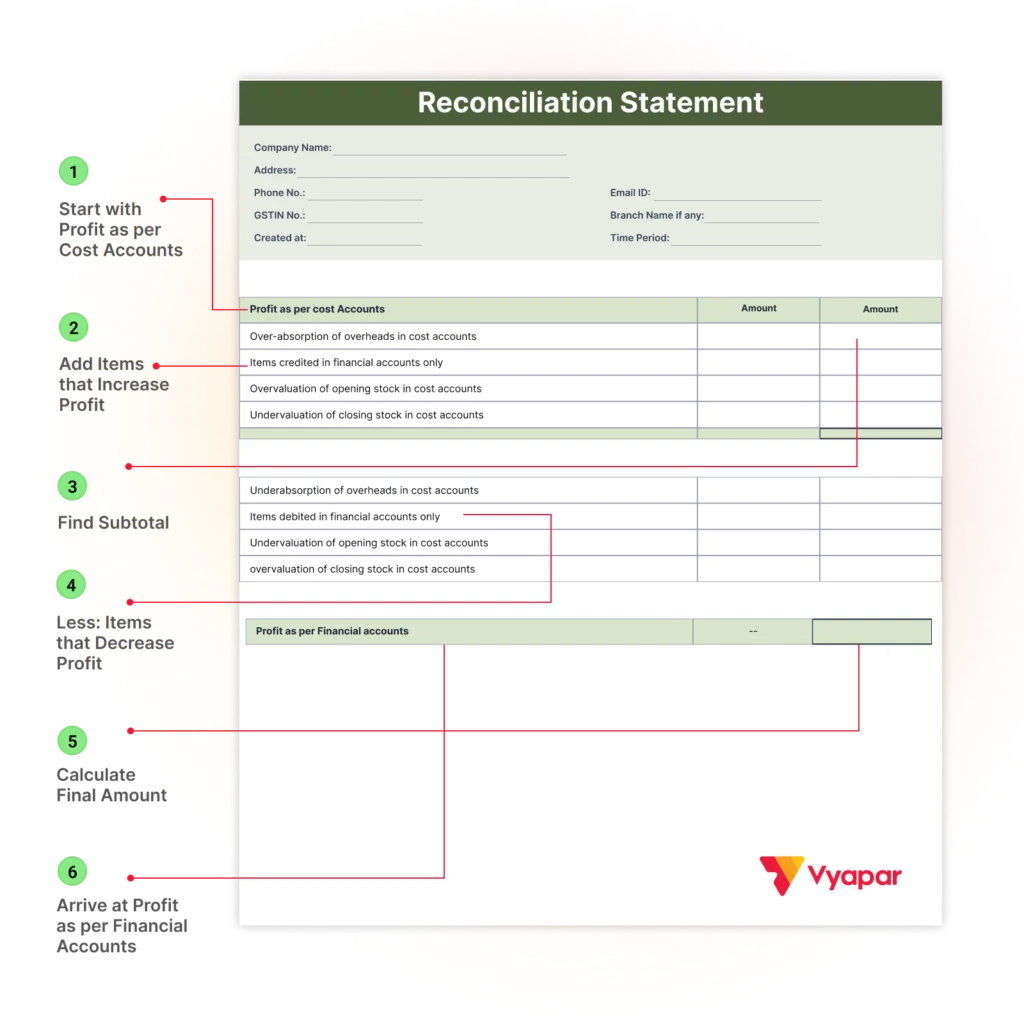
How to Use the Reconciliation Statement of Cost and Financial Accounts Format
- Start with Profit as per cost accounts.
Write the profit shown in the cost accounts as the starting point. - Add Items that Increase Profit (Cost > Finance)
Add the following:- Over-absorption of overheads
- Items credited only in financial accounts
- Overvaluation of opening stock
- Undervaluation of closing stock
- Find Subtotal
Calculate the total after adding all the above items. - Less: Items that Decrease Profit (Cost < Financial)
Subtract the following:- Under-absorption of overheads
- Items debited only in financial accounts
- Undervaluation of opening stock
- Overvaluation of closing stock
- Calculate Final Amount
After subtracting, you will get the adjusted profit. - Arrive at Profit as per Financial Accounts
The final figure is the profit as per the financial accounts.
Benefits of the Reconciliation Statement of Cost
and Financial Accounts Template
- Identifies Profit Differences: Helps clearly identify reasons for differences between cost and financial profits.
- Detects Accounting Errors: The reconciliation statement of cost and financial accounts template helps spot omissions and miscalculations.
- Supports Audit Compliance: Proper documentation through a reconciliation statement of cost and financial accounts template ensures audit readiness.
- Enhances Cost Control: By analyzing overhead differences, businesses improve cost management efficiency.
- Ensures Uniform Reporting: The format of reconciliation of cost and financial accounts standardizes financial comparison procedures.
- Time-Saving with Templates: Using a ready-made reconciliation statement of cost and financial accounts template reduces manual effort and improves accuracy.
Ready to Manage your Business Like a Pro?
Benefits of Using Vyapar for Business Growth
Automated Profit and Loss Reports
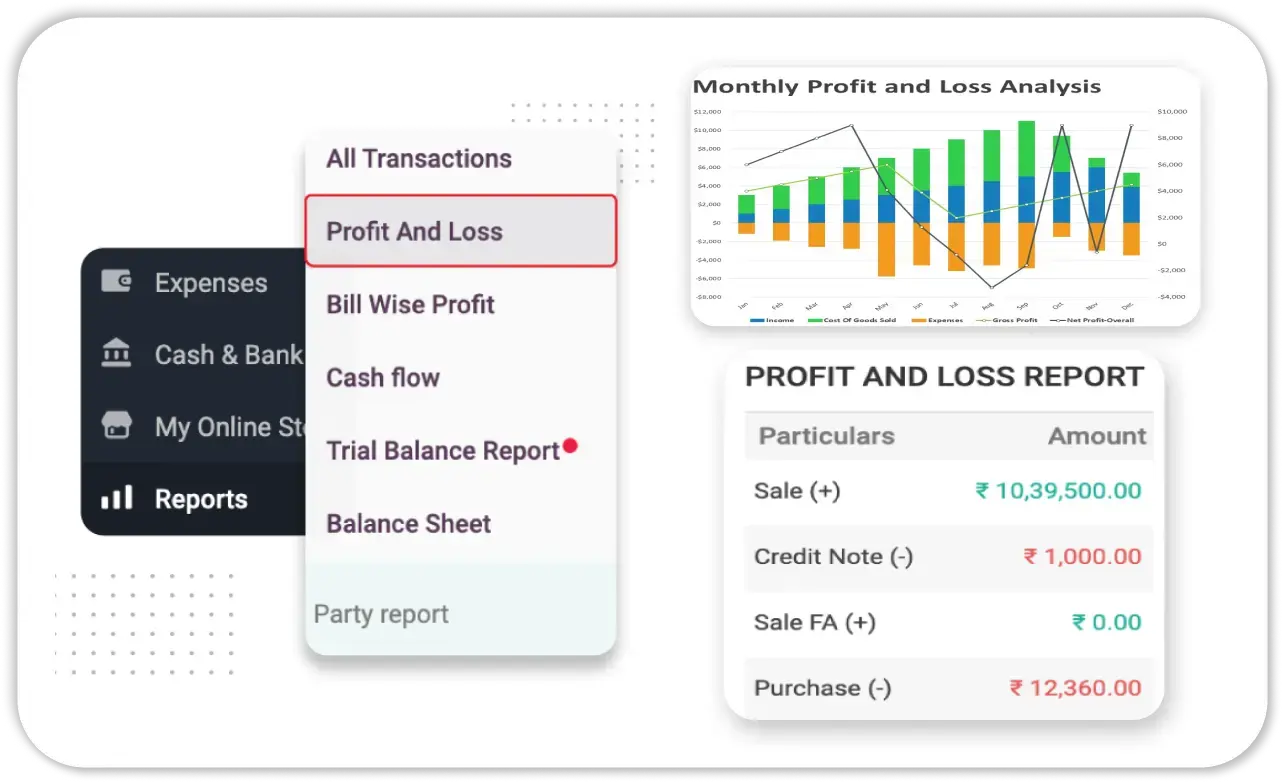
Automated Profit and Loss Reports
Generates real-time Profit & Loss statements for accurate financial review.
Helps compare financial profit with cost profit easily.
Simplifies the identification of differences for the reconciliation of cost and financial accounts.
Smart Expense Categorisation
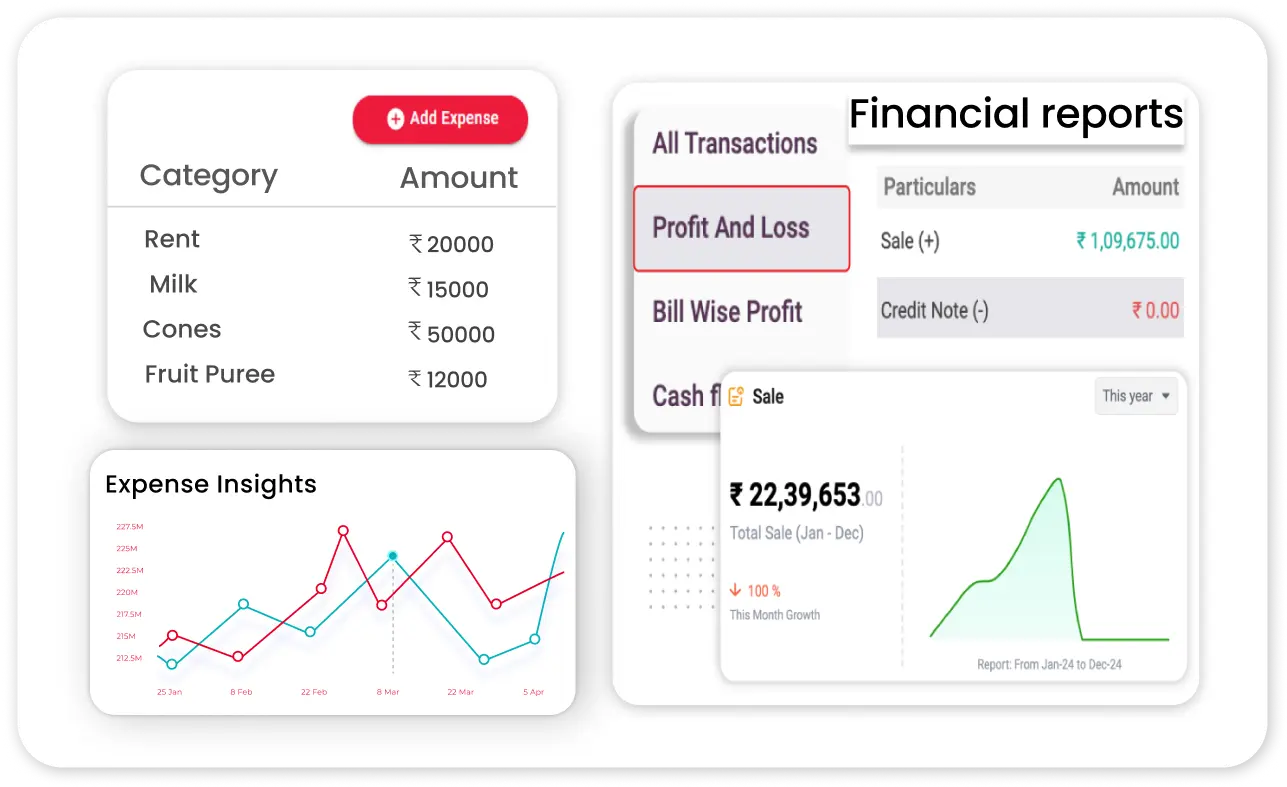
Smart Expense Categorisation
Classifies expenses into administrative, selling, financial, and indirect categories.
Separates financial-only expenses for clear reconciliation adjustments.
Improves accuracy in preparing reconciliation statements.
Inventory and Stock Valuation Management
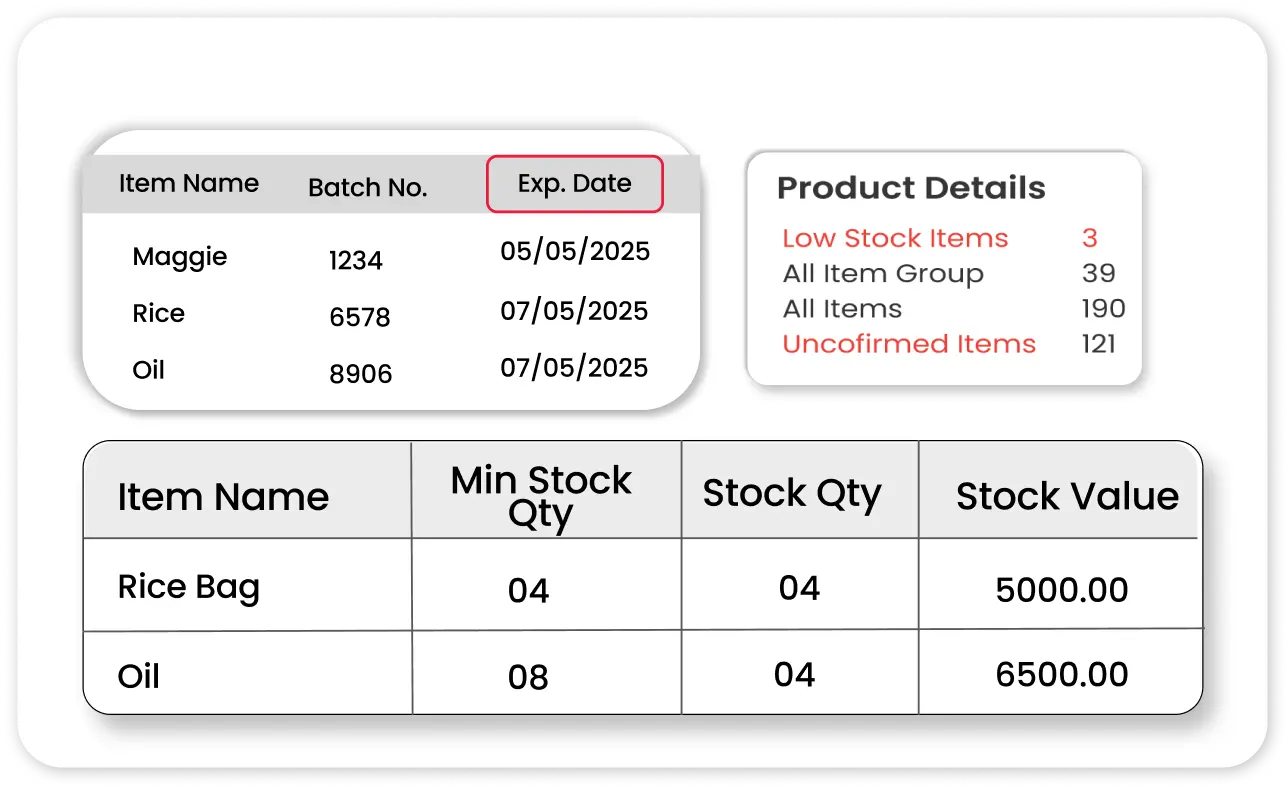
Inventory and Stock Valuation Management
Provides real-time stock tracking and valuation reports.
Highlights valuation differences between cost and financial records.
Supports accurate adjustments in reconciliation statements.
Depreciation and Asset Management
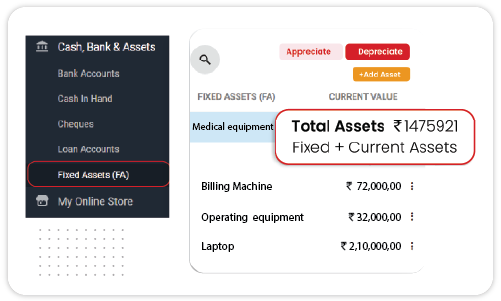
Depreciation and Asset Management
Records depreciation as per financial accounting standards.
Allows comparison with cost-based depreciation methods.
Makes reconciliation of asset-related differences easier.
Exportable Financial Reports
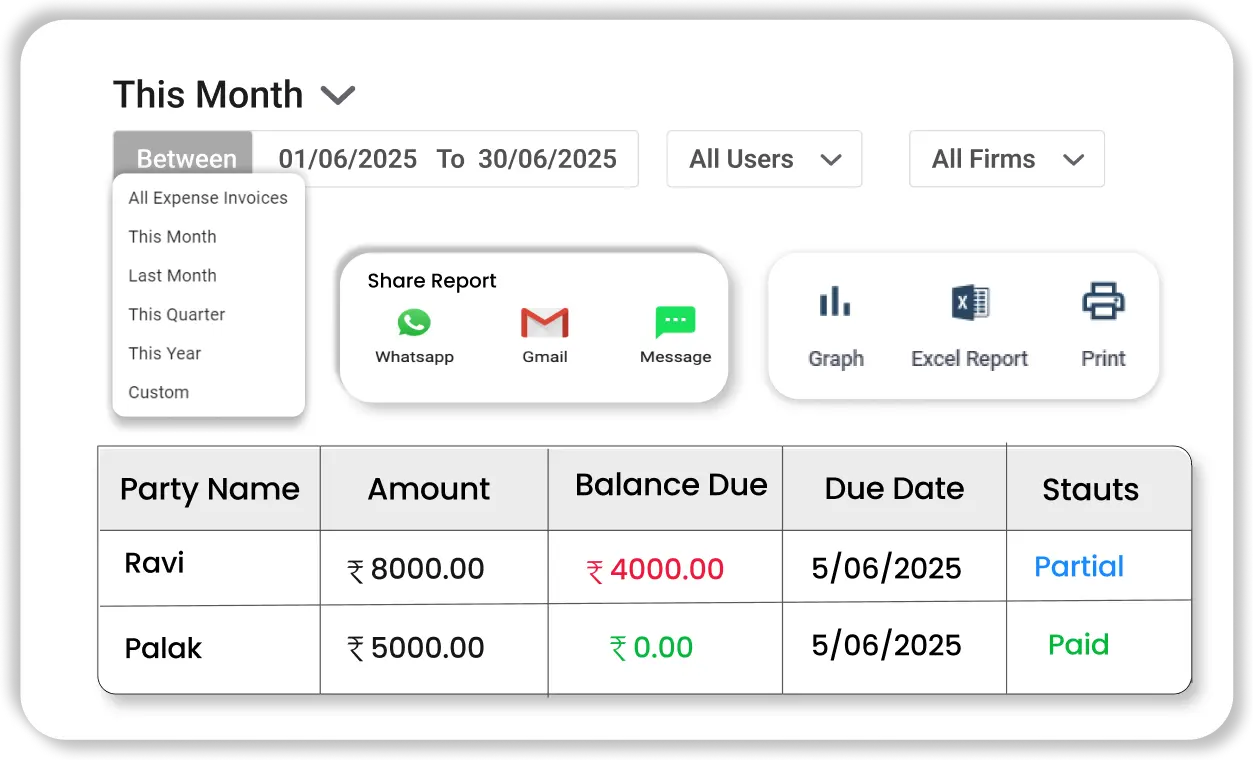
Exportable Financial Reports
Enables report export in Excel and PDF formats.
Supports preparation of reconciliation statement format in Excel, Word, or PDF.
Ensures audit-ready documentation and compliance.


Get a Free Demo
Frequently Asked Questions (FAQ’s)
Reconciliation of cost and financial accounts is a statement prepared to explain the difference between profit shown in cost accounts and profit shown in financial accounts.
Start with profit as per cost or financial accounts, then add or deduct items like overhead differences, stock valuation changes, and financial expenses to match both profits.
It is required to identify reasons for profit differences, ensure accuracy, detect errors, and maintain consistency between cost records and financial statements.
A reconciliation statement is prepared in statement form, while a memorandum reconciliation account is prepared in ledger format to adjust differences step by step.
It is the process of comparing costs and financial profits and adjusting differences caused by accounting methods, overhead absorption, and valuation variations.
Did not find what you were looking for?


Billing software in India for small businesses